
Will bad credit affect getting a job?

Disclosure regarding our editorial content standards.
You may know that credit scores can impact eligibility for loans, mortgages and other types of financial aid. What you might not know is that they can be used as a criterion for employment.
Credit checks, which involve checking your financial health and credit score, are becoming increasingly common in the hiring process. A survey report from the National Association of Professional Background Screeners revealed that 25 percent of HR professionals use credit checks as part of hiring for certain positions, and six percent check credit for all types of roles.
So, can your credit score affect your job? Yes, in that your credit score can impact your ability to get a job.
Are employers allowed to check your credit?
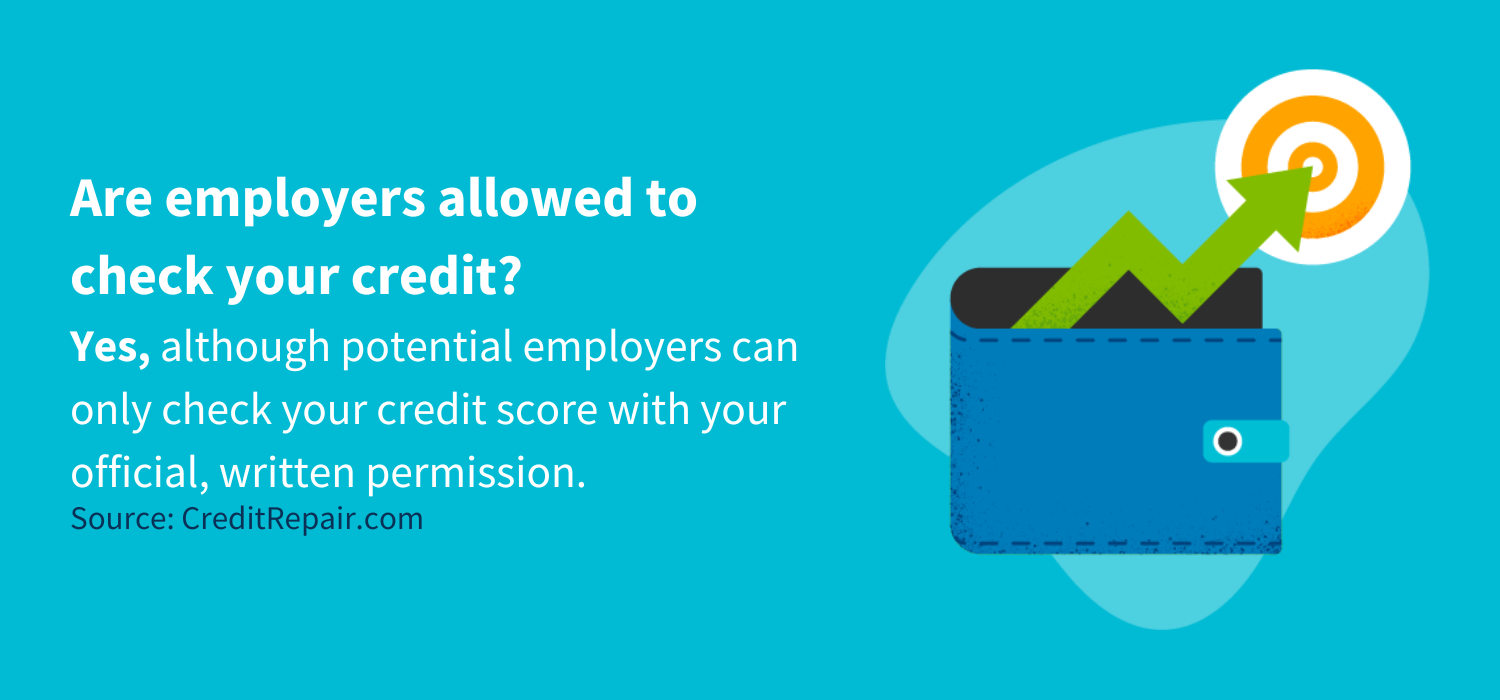
Yes, although potential employers can only check your credit score with your official, written permission. Financial information is extremely personal, so unless you consent, they won’t be able to check it. However, it may be a deal-breaker for potential employers if you refuse to grant permission.
Why an employer may care about your credit
Many employers view a candidate’s credit report as an indicator of their work ethic and responsibility. A low credit score may be seen as a sign that the individual isn’t careful with money or is unable to manage their finances. As a result, employers may be reluctant to hire someone with a low credit score.
On the other hand, a high credit score may be seen as a sign that an individual is reliable and trustworthy. In today’s economy where job security is often uncertain, employers are looking for any indication that a candidate will be a good long-term investment.
You may want to check with a potential employer to see how much weight they give to a credit score when considering candidates. It might be worth simply explaining your situation to them if your credit is worse than you’d like it to be.
What jobs are likely to ask to check your credit?
Most job roles don’t involve accessing people’s personal information or dealing with financial assets. For regular jobs, credit score checking by employers is less relevant. However, if the role you’re applying for comes with a great deal of responsibility, you should be prepared for a credit check. Examples of jobs where credit checks are commonplace include law enforcement, banking, accounting, human resources or any job that requires a security clearance.
Employers, you and your rights
Employers are free to choose whether to hire you, but you should remember you still have rights. This is especially true with personal information, including your credit report.
Employers can do a background investigation as part of the application process. This can sometimes involve requesting your credit report. However, they’re obligated to follow laws outlined in the Fair Credit Reporting Act (FCRA), which offers a variety of consumer safeguards. Here’s an overview of the essential aspects of the FCRA:
- You have the right to know if your credit information is used against you to deny your application for credit, employment or insurance.
- You have the right to request and access all the information a consumer reporting agency has about you. This is referred to as file disclosure. You can get access to your credit reports at Annualcreditreport.com.
- You should get access to your credit report but can also restrict access by others. Generally, access is restricted to those with a “permissible purpose.” This includes landlords, creditors and insurance companies. If your potential employer requests access to your credit report, you must give written consent before they can do so.
- If you find your credit report information is inaccurate or incomplete, you can dispute it. The credit bureau will contact the data provider to check whether the information is inaccurate. If it is, the credit bureau will rectify or remove any inaccuracy within a given time frame.
- You also have the right and ability to activate a security freeze on your credit report. This can ensure potential lenders or employers can’t check your credit report during the freeze period.
How is this legal?
While it may seem like a privacy invasion, an employer can’t access your credit information without your written consent. However, refusing to grant access may result in your job application no longer being considered. It may give your potential employer the impression you have something worth hiding.
One important thing to remember is when employers are planning on hiring a job candidate, they’re making a big investment. It makes sense that they’d want as much insight into their character as possible.
In the interest of protecting their investment as well as your privacy, the law states that they can only access your credit report with your written consent. Another noteworthy point is that they only have access to basic information relevant for the purpose at hand. They won’t see detailed personal information, only the big picture of your credit history.
How does it work?
If a potential employer intends to use your credit report information for screening candidates, they may advertise this in the job posting. Otherwise, they’ll let you know after you’ve submitted your application. You can always choose to deny access and ask them to continue with your application without it. Depending on the nature of the job, they may or may not agree to this, particularly if the role involves dealing with financial assets.
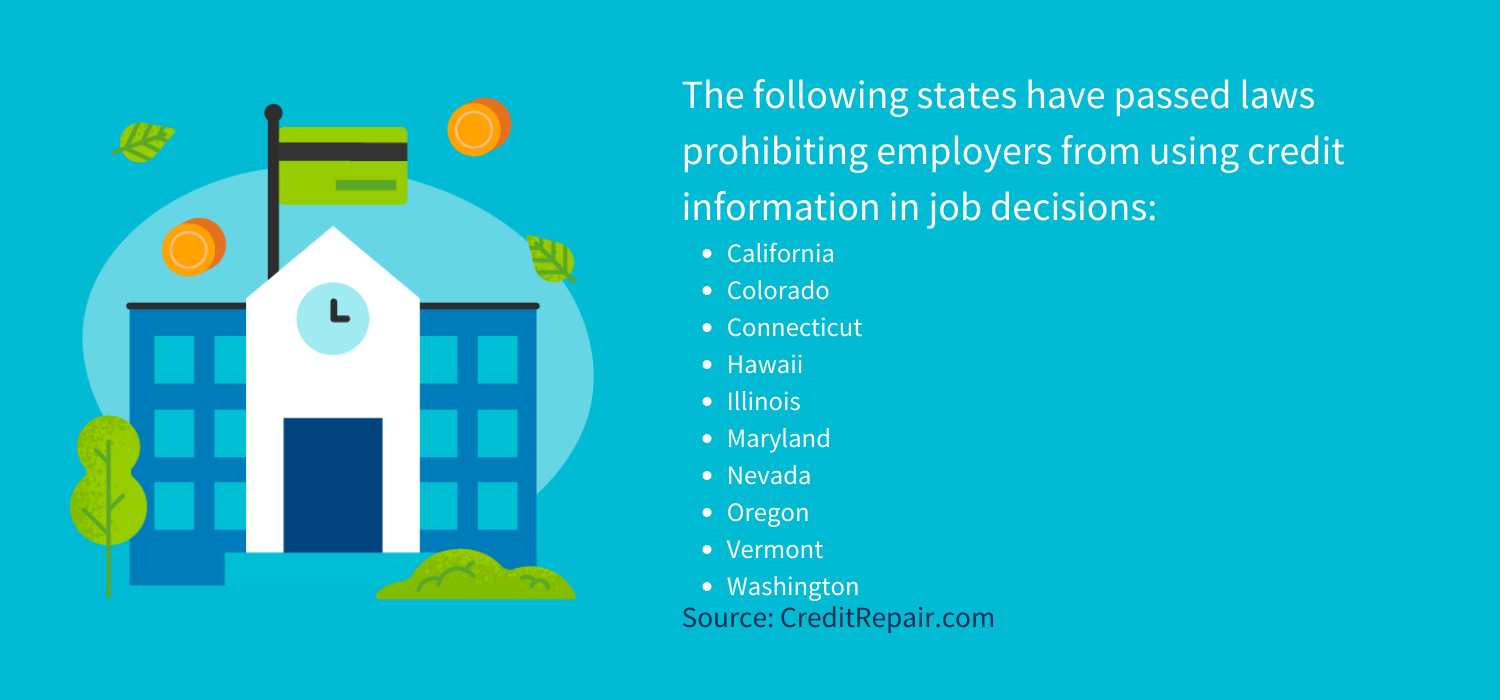
The following states have passed laws prohibiting employers from using credit information in job decisions:
- California
- Colorado
- Connecticut
- Hawaii
- Illinois
- Maryland
- Nevada
- Oregon
- Vermont
- Washington
Can your credit score affect your current job?
While your current employer can ask for access to your credit information to reevaluate your candidacy, this isn’t common. If you’re performing well in your job, there’s no reason for your employer to suddenly check your credit score. However, in large-scale corporate companies that are downsizing, it may be used as criteria to reevaluate employees.
How to improve your credit
If you’re concerned your credit history might negatively impact your future employment opportunities, it’s worth taking steps to improve it. Here are some tips to get started with improving your credit:
- Request a credit report. Before doing anything, you’ll want to evaluate your current credit report. By knowing what you can improve on, you’ll be able to work intelligently towards fixing it.
- Ensure accuracy. It’s not uncommon for credit reports to have mistakes. There may be errors like duplicate accounts, history errors or fraud activity.
- Dispute errors. If you find errors, you can dispute them. The credit bureaus will review potential errors and rectify any mistakes they may have made.
- Fix what you can. Rectify any problems that are in your control. By putting in a little conscious effort, you’ll be able to achieve improvement. Keep your credit score in mind during future transactions to avoid the further negative impact it can have on your life.
Credit reports can affect many areas of life, including your ability to get loans and mortgages and even your employment opportunities. Knowing your rights is essential.
It’s also important to check the accuracy of your credit report to ensure you’re not being misrepresented. You can file disputes to clean up your negative credit history and be mindful of both your activity and how it impacts your credit score. If you would like help with filing disputes, the credit advisors at CreditRepair.com would be happy to help.
Note: The information provided on CreditRepair.com does not, and is not intended to, act as legal, financial or credit advice; instead, it is for general informational purposes only.




If you need help, call the credit experts
learn moreFICO and “The score lenders use” are trademarks or registered trademarks of Fair Isaac Corporation in the United States and other countries.
** Your results will vary